
Introduction
Moving a television set is a delicate task. A single mistake can lead to costly screen damage. Whether you own a fragile OLED, a bulky older model, or a sleek LCD/LED TV, proper packing is non-negotiable. This guide walks you through professional techniques to ensure your TV arrives at your new home in perfect condition.
Why Special Care is Essential?
Modern TVs are designed for viewing, not transport. Their screens are extremely vulnerable to pressure, impacts, and scratches. The internal components are also sensitive to jostling. Using the original box is ideal, but with the right materials and method, you can achieve equal security without it.
Pre-Packing Checklist
Gather your supplies before starting with a checklist:
- Strong cardboard box (ideally TV-specific, or a large moving box)
- Packing tape and a marker
- High-quality packing materials: bubble wrap, foam sheets, or moving blankets
- Packing peanuts or crumpled paper for void fill
- Sturdy packing tape (3 inches wide)
- Clean, microfiber cloths
- Cardboard corners or edge protectors (optional but recommended)
- A helper (for larger screens)
Also read How to Safely Transport Mirror For The Move?
Step-by-Step Packing Instructions
Step 1: Prepare Your TV
Unplug all cables, carefully labeling each one (e.g., “HDMI 1 – Gaming Console”) for easy re-setup. Use a microfiber cloth to gently clean the screen and body. Power down the TV completely.
Step 2: Protect the Screen
Cover the entire screen with a soft cloth, foam sheet, or several layers of bubble wrap (with the bubbles facing the screen). Never let plastic bubble wrap directly touch the screen without a cloth barrier, as static or pressure can cause harm. Secure this layer with painter’s tape—avoid using strong packing tape directly on the TV frame.
Step 3: Add Corner and Edge Protection
The corners and edges are the most impact-prone areas. Use pre-bought cardboard corner protectors or fashion your own from spare cardboard. Wrap the entire perimeter of the TV securely.
Step 4: Create a Full Cushion Layer
Wrap the entire protected TV in a thick layer of bubble wrap or a moving blanket. Ensure there are no exposed areas. Use strong packing tape to seal the wrap, keeping the tape off the TV itself.
Step 5: Box and Secure the TV
If using the original box, insert the wrapped TV. For a standard moving box, place a thick layer of packing peanuts or crumpled paper at the bottom. Gently place the TV inside, screen-side facing the bottom of the box (the strongest part). Fill all empty spaces around the TV, especially at the top, with more cushioning material to prevent any movement inside the box.
Step 6: Seal and Label
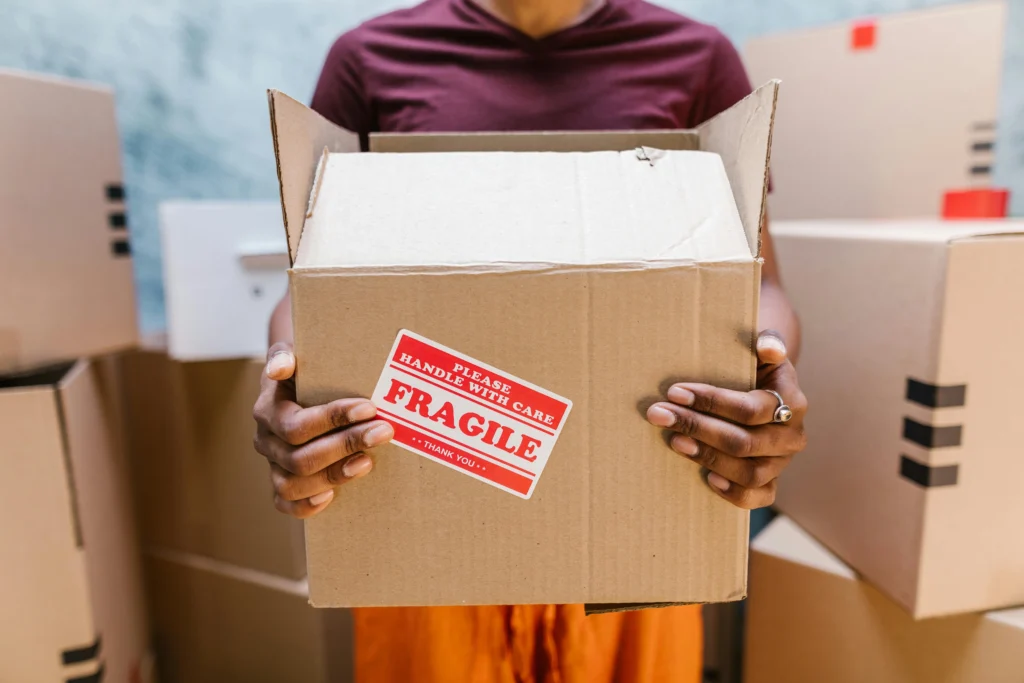
Securely seal the box with ample packing tape, reinforcing all seams. Use your marker to clearly write “FRAGILE – TELEVISION – THIS SIDE UP” on multiple sides. Add arrows indicating the upright position.
Loading and Transport Tips
- Position Last: Load the TV box upright (never flat) as one of the last items in the moving vehicle.
- Secure Positioning: Place it against a flat, stable surface like the truck wall or a secured piece of furniture. Use straps or other soft items to keep it firmly in place and prevent shifting during transit.
- Climate Control: Avoid leaving the packed TV in extreme heat or cold for prolonged periods.
Read more about How much does a Full Packing Service Cost?
FAQs
Can I move a TV without its original box?
Absolutely. The key is to create a robust protective layer using ample bubble wrap or foam and ensuring it is placed securely in a snug, well-cushioned box where it cannot shift.
Is it safe to lay a flat-screen TV flat during transport?
No. Most modern flat-screen TVs are designed to be transported upright. Laying them flat significantly increases the risk of pressure cracks and pressure on the delicate screen. Always keep it vertical.
How do I pack a TV for moving long-distance?
For long-distance moves, follow all steps meticulously and consider double-boxing. Place the securely packed TV box inside a slightly larger box with additional cushioning material between them for shock absorption.
Should I buy a specialty TV moving kit?
If you don’t have the original packaging, a TV moving kit is an excellent investment. These kits include a fitted box, foam corner protectors, and polystyrene blocks, offering near-original box protection.
Conclusion
Packing a TV for moving requires careful attention and the right materials, but it is a straightforward process with a comprehensive checklist. By taking the time to properly clean, protect the screen, cushion the entire unit, and secure it in a well-labeled box, you drastically reduce the risk of damage. Remember: when in doubt, over-protect. The cost of extra packing supplies is minimal compared to the price of replacing a damaged television. With this guide, you can transport your TV with confidence and enjoy your favorite shows safely in your new home.