


Introduction
Moving house involves more than packing furniture and boxes. Outdoor equipment, especially lawn mowers, requires extra care due to its weight, fuel, sharp blades, and moving parts. Whether you’re relocating locally or across the country, properly preparing your lawn mower can prevent damage, improve safety, and ensure it’s ready to use once you arrive.
In this guide, you’ll learn the best practices for packing and moving a lawn mower safely during removals.
Why Lawn Mowers Need Special Handling
Unlike standard household items, lawn mowers contain combustible fuel, engine oil, batteries (in some models), and sharp cutting blades. Improper handling can result in leaks, fire hazards, or damage to the mower and other belongings.
Taking a little extra time to prepare your mower before moving can save you from expensive repairs and safety risks.
Step 1: Empty the Fuel Tank
One of the first things you should do is remove all fuel from the mower.
Fuel can spill during transport, creating both a fire hazard and unpleasant odours. Run the mower until the tank is nearly empty or use a fuel siphon to drain any remaining petrol into an approved fuel container.
If your mower uses diesel, follow the manufacturer’s recommendations for safe transportation.
Step 2: Drain or Check the Engine Oil
Depending on how the mower will be transported, draining the engine oil may be necessary.
If the mower is likely to be tilted during loading or transport, oil can leak into the engine or onto other items. Check your owner’s manual for the correct procedure before draining and refilling the oil.
Step 3: Disconnect the Spark Plug
Disconnecting the spark plug prevents the mower from accidentally starting while being handled.
Simply remove the spark plug wire and secure it away from the plug. This small step significantly improves safety during the move.
Step 4: Clean the Lawn Mower
Before packing, thoroughly clean the mower.
Remove grass clippings, mud, leaves, and dirt from:
- The cutting deck
- Wheels
- Blades
- Engine housing
- Air vents
Cleaning prevents debris from hardening during storage and keeps dirt from spreading into the removal vehicle.
Step 5: Remove or Fold the Handle
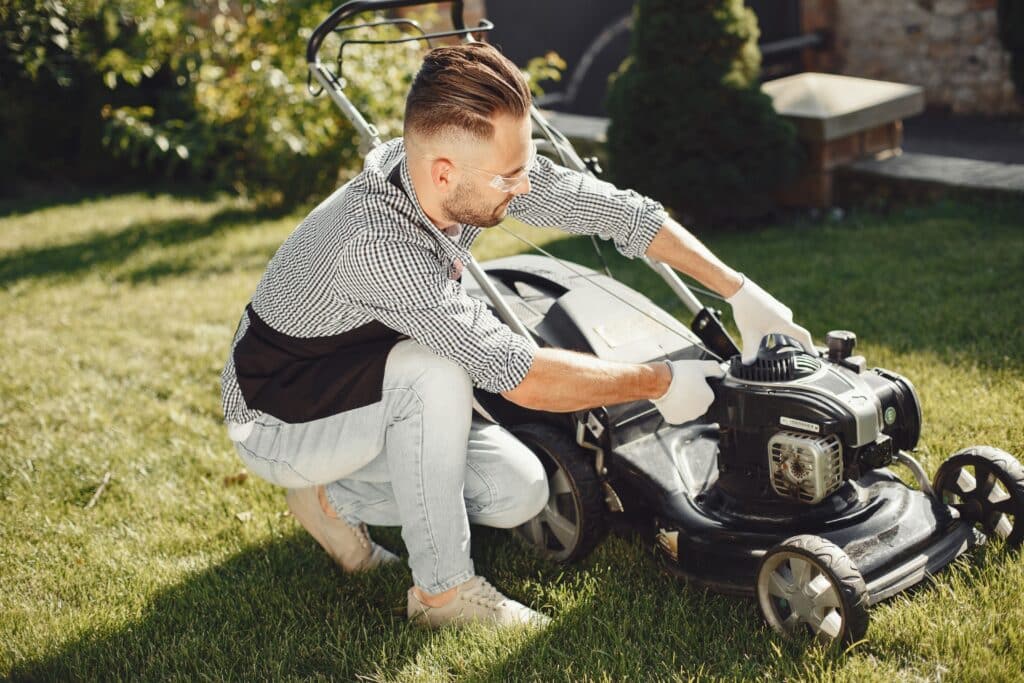
Many walk-behind lawn mowers have folding handles that reduce the amount of space they occupy.
If your handle cannot fold, remove it according to the manufacturer’s instructions. Keep any bolts, nuts, and screws in a labelled plastic bag and tape it securely to the mower.
Step 6: Protect the Cutting Blade
The blade is one of the most dangerous parts of the mower during transport.
Use:
- Heavy-duty cardboard
- Blade covers
- Thick moving blankets
- Foam padding
Secure the protective material with tape or cable ties to reduce the risk of injury and prevent damage to nearby items.
Step 7: Secure Loose Components
Inspect the mower for removable parts, including:
- Grass collection bag
- Mulching attachment
- Side discharge chute
- Battery (for electric models)
Remove these components where possible and pack them separately in clearly labelled boxes.
Step 8: Prepare Electric or Battery-Powered Lawn Mowers
Electric and cordless lawn mowers require slightly different preparation.
Before moving:
- Remove the battery.
- Store the battery in its original protective case if available.
- Coil the power cable neatly.
- Protect electrical connectors from moisture.
Always transport lithium-ion batteries according to manufacturer recommendations.
Step 9: Wrap the Lawn Mower
Once prepared, wrap the mower using protective materials such as:
- Moving blankets
- Bubble wrap
- Furniture pads
Secure the wrapping with packing tape or stretch wrap while ensuring ventilation around the engine if storing for extended periods.
Step 10: Load the Lawn Mower Safely
Lawn mowers are heavy, so proper lifting techniques are essential.
When loading:
- Use loading ramps whenever possible.
- Keep the mower upright.
- Secure it using ratchet straps.
- Prevent movement during transit.
- Avoid stacking heavy boxes on top of it.
Keeping the mower upright reduces the chance of fluid leaks and protects the engine.
Moving Ride-On Lawn Mowers
Ride-on lawn mowers require additional planning because of their size and weight.
Before transport:
- Empty the fuel tank.
- Disconnect the battery.
- Lower the cutting deck.
- Secure loose accessories.
- Use a trailer with loading ramps.
- Fasten the mower with heavy-duty tie-down straps.
Professional removal companies often have the equipment needed to transport ride-on mowers safely.
Common Mistakes to Avoid
Avoid these common moving mistakes:
- Transporting the mower with a full fuel tank.
- Forgetting to disconnect the spark plug.
- Leaving grass clippings inside the deck.
- Transporting the mower on its side without checking manufacturer guidance.
- Failing to secure the mower inside the vehicle.
- Losing removable bolts or accessories.
Should You Hire Professional Removal Services?
If you’re moving long distances or transporting expensive gardening equipment, professional movers can make the process easier.
Many removal companies have experience handling heavy outdoor machinery and use specialised equipment to transport lawn mowers safely, reducing the risk of injury or damage.
FAQs
Can you move a lawn mower with petrol inside?
It’s strongly recommended to empty the fuel tank before moving. Petrol can leak during transport and poses a fire risk.
Should I remove the lawn mower blade before moving?
Removing the blade isn’t always necessary, but covering it with a protective blade guard or heavy cardboard is highly recommended to prevent injuries and damage.
Can a lawn mower be transported on its side?
Some lawn mowers can be tilted briefly, but transporting them on their side may cause oil or fuel to leak. Always follow the manufacturer’s instructions.
Conclusion
Moving a lawn mower safely requires careful preparation, but the process is straightforward when you follow the right steps. Draining fuel, disconnecting the spark plug, cleaning the mower, protecting the blade, and securing loose components all help reduce the risk of damage or accidents during transit. Whether you’re moving a compact electric mower or a large ride-on model, investing a little extra time in proper packing ensures your equipment arrives safely and is ready to keep your new lawn looking its best.