
Introduction
Moving a tumble dryer might seem straightforward, but these appliances are heavier and more delicate than they look. One wrong move—like tilting it incorrectly or grabbing the door—can lead to a costly repair bill or even personal injury. Whether you are relocating to a new home or just rearranging your laundry room, this guide will walk you through how to move a tumble dryer safely, using expert advice from official appliance manuals.
Before You Move: Preparation is Key
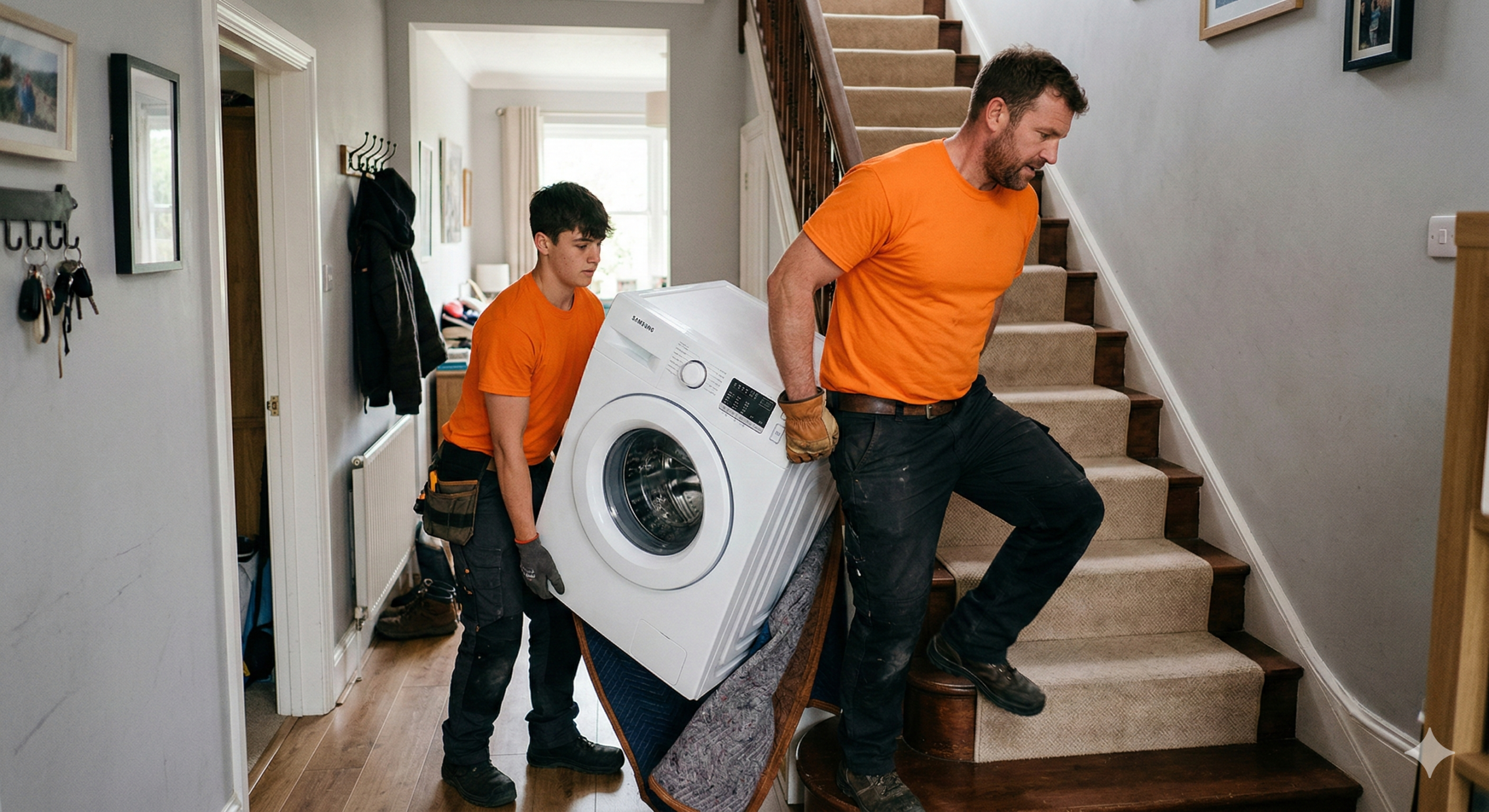
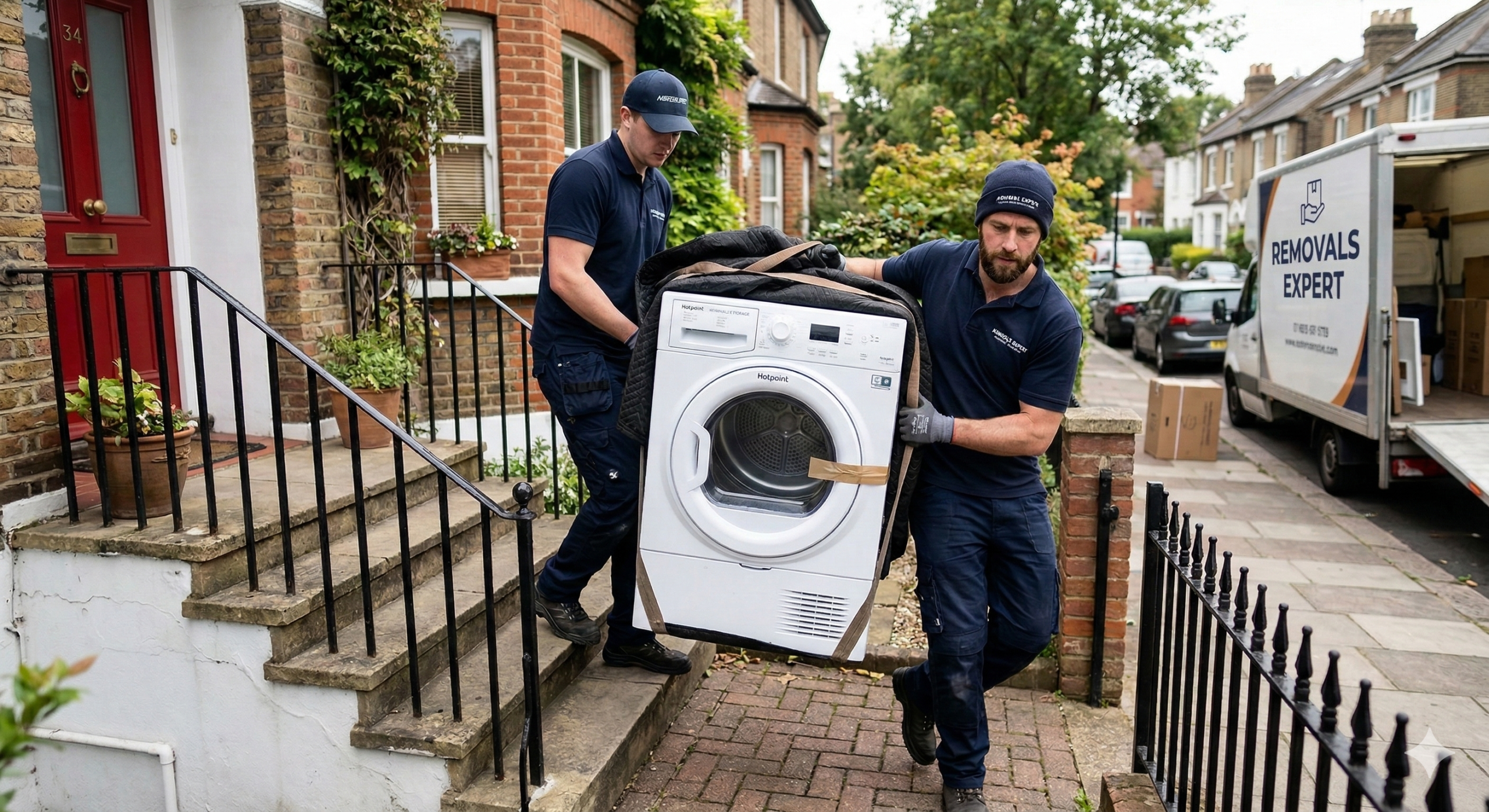
Moving a tumble dryer isn’t a one-person job. Most user manuals explicitly state that the appliance is very heavy and should never be transported or carried alone . Before you even touch the machine, take these preparatory steps to ensure a smooth move.
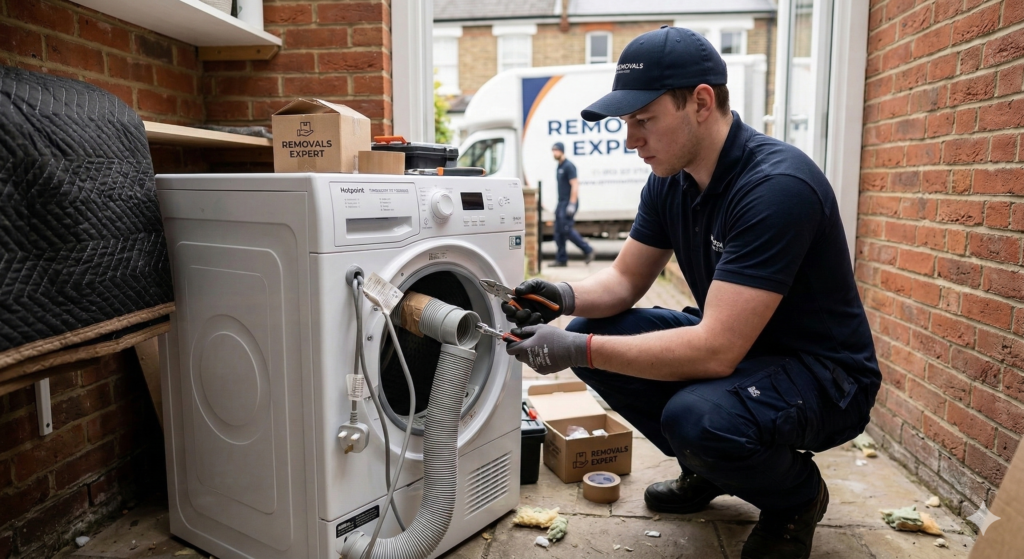
First, you must disconnect the dryer from all utilities. Unplug the power cord from the mains socket—never pull the cable itself . If your dryer has a direct drainage hose (plumbed into a waste pipe), you will need to disconnect this as well. Be prepared for a small amount of water to spill from the hose.
One of the most critical—and often overlooked—steps is dealing with residual water. In heat pump and condenser dryers, a small amount of water can remain in the pump area. If you tip the dryer immediately, this water can spill inside the machine, potentially causing damage. One manual offers a professional tip: run the “Warm air” programme for about a minute with an empty drum before you start moving it. This cycles any remaining water into the container, which you can then empty . Finally, remove any lint filters and empty the water tank completely.
The Dos and Don’ts of Lifting and Tilting
Now for the actual heavy lifting. There are strict rules about how to handle a tumble dryer to avoid internal damage.
The Golden Rule: Transport Upright if Possible
The ideal way to move a tumble dryer is in its upright position . This prevents any oil from the compressor (in heat pump models) from flowing where it shouldn’t and stops residual water from leaking into sensitive electronics.
The 30-Degree Rule
If the moving path (like a narrow staircase) makes upright transport impossible, most manufacturers allow you to tilt the dryer. However, there is a strict limit. You must only tilt the dryer onto its right side (when viewed from the front) . Furthermore, the tilt angle should not exceed 30° . Tilting it onto the left side or backwards can damage the drum or the heat pump unit.
Where to Hold
Never grasp protruding parts to lift the machine. The door is not a handle . Using it to lift can snap the hinges immediately. For most models, the safest way to carry the dryer is by the front feet and, if your model has one, the protruding lip at the back of the lid . Always check your manual for specific gripping points.
Read more about How to move a washing machine?
Transporting and Reinstallation
When loading the dryer onto a truck or trolley, ensure it is secure and will not tip over. If using a hand truck, you must transport it with its left or right side resting on the truck, never on its front or back.
The Waiting Game: The Heat Pump Cooldown
Once you have successfully moved the dryer to its new location and placed it roughly where it needs to go, do not plug it in immediately. This is vital for heat pump dryers. The compressor contains oil that needs time to settle after being moved. If you switch it on too soon, you can permanently damage the compressor. You must wait at least one hour . Some manufacturers, like Beko, actually recommend waiting up to 12 hours for heat pump models before the first use .
Levelling and Positioning
While you wait for that hour to pass, you can set up the dryer properly. Place it on a firm and level surface . Use a spirit level to check it, and adjust the screw feet until the dryer is perfectly stable and doesn’t rock . Never remove the feet .
Ensure good ventilation. Do not block the gap between the bottom of the dryer and the floor with thick carpets . The air intake grilles at the front and back must also remain unobstructed to prevent overheating . Finally, plug it directly into a wall socket—never use an extension cable or multi-plug adapter .
Learn more about How to Safely transport a Disherwasher?
FAQs
Can I lay my tumble dryer on its back to move it?
No. Most manufacturers advise against laying the dryer on its back. If you cannot keep it upright, you must tilt it onto its right side (when viewed from the front) at an angle not exceeding 30° . Laying it flat can cause serious internal damage.
What happens if you don’t wait 1 hour before turning on a heat pump dryer after moving it?
The heat pump contains a compressor with oil that needs to settle back into place. If you turn it on too soon, the compressor may run without proper lubrication, leading to premature wear, increased noise, or complete compressor failure .
Is it safe to move a tumble dryer by myself?
No. Every manual we reviewed stresses that the appliance is very heavy. Never transport or carry the appliance alone . You need at least one other person to help lift and maneuver it safely to avoid injury and damage.
Do I need to remove the door when moving the dryer?
Generally, no. You do not need to remove the door. However, you must ensure the door is securely closed and never use it as a handle to lift the machine .
Conclusion
Moving a tumble dryer successfully comes down to respecting its weight and mechanical sensitivity. By following these steps—preparing the machine, moving it with a partner while observing the 30-degree tilt rule, and crucially, waiting before restarting it—you can ensure your appliance arrives safely and continues to perform efficiently in its new home.