
Introduction
Moving house is a significant undertaking, and among the most challenging items to relocate is the washing machine. Often weighing between 150 and 250 pounds, these appliances are not only heavy but also filled with delicate components that can be easily damaged if not handled correctly . Whether you are moving across town or just to a new apartment, a successful move requires careful planning, the right tools, and a methodical approach. This guide provides a comprehensive, step-by-step walkthrough to ensure your washing machine arrives at its new home in perfect working order.
Preparation: Gathering Your Tools and Supplies
Before you even touch a hose, it is crucial to assemble all the necessary equipment. Having everything on hand will make the process smoother and safer. Here is a checklist of what you will need :
- Appliance Dolly: A standard dolly is not sufficient. An appliance dolly is taller and comes with heavy-duty straps to secure the machine .
- Transit Bolts: These are essential for front-loading machines to lock the drum in place. If you no longer have the original ones, order replacements from the manufacturer .
- Moving Blankets: These will protect the machine’s exterior from scratches and dents .
- Wrenches or Pliers: For disconnecting the water supply hoses .
- Bucket and Towels: To catch any residual water that drains from the hoses and the machine’s filter .
- Packing Tape or Zip Ties: For securing power cords and hoses to the back of the machine so they don’t drag or snag .
- Furniture Sliders or Cardboard: These are useful for protecting your floors and moving the machine away from the wall before lifting it onto the dolly .
- A Helper: This is not a solo job. You will need at least one other person to help lift and maneuver the appliance safely .
Learn more about How to Transport a Fridge Freezer Safely?
Step-by-Step Guide to Moving Your Washer
Step 1: Disconnect and Drain the Machine
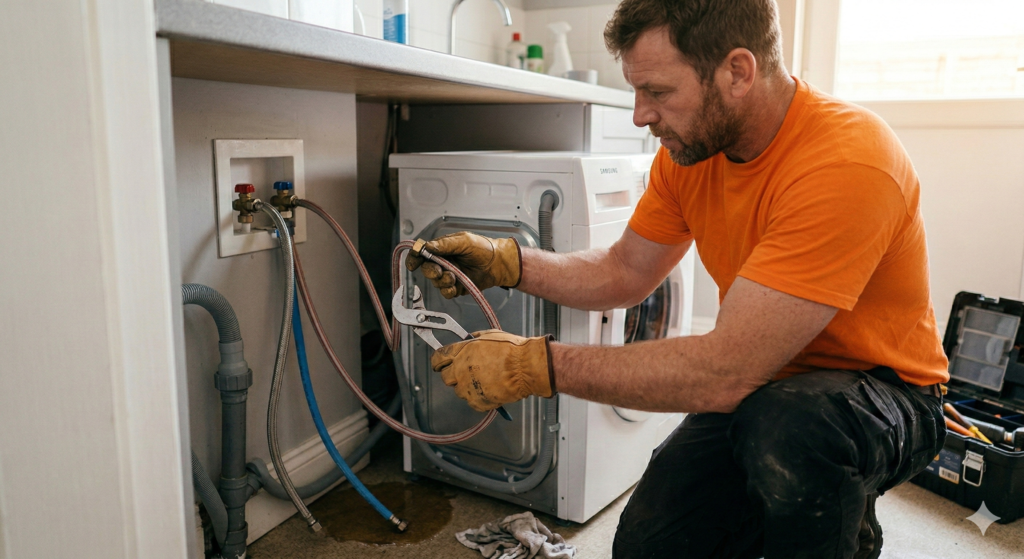
Safety first. Begin by unplugging the washing machine from the electrical outlet . Next, turn off the water supply valves (both hot and cold) located behind the machine . Using your wrench, carefully disconnect the water inlet hoses. Have your bucket and towels ready, as water will spill out . You should also disconnect the drain hose from the standpipe or sink and allow any remaining water to drain into your bucket .
For a more thorough job, locate the drain pump filter (usually behind a small access panel at the front bottom of the machine). Place towels and a shallow pan underneath, then slowly open the filter to drain any trapped water . This step removes hidden water that could leak during the move.
Step 2: Secure the Drum with Transit Bolts
This is arguably the most critical step, especially for front-loading washers. The drum is suspended to absorb vibration, but during transport, it can swing and cause catastrophic damage to the bearings and suspension. Transit bolts are designed to lock this drum in place. Locate the holes on the back of the machine and insert the bolts, tightening them securely with a wrench . If you have lost the bolts, you must purchase replacements before the move. For top-loaders, check the manual, but you may simply need to secure the lid with tape .
Step 3: Protect the Exterior and Loose Parts
Now it is time to wrap the machine. Cover it with moving blankets to protect it from bumps and scrapes, paying special attention to the corners and the control panel . Secure the blankets with packing tape or stretch wrap. Bundle the disconnected hoses and the power cord together and tape them to the back of the machine so they are out of the way . If your machine has a removable dispenser drawer, pack it separately .
Step 4: Move the Machine to the Dolly
With a helper, carefully slide the washing machine away from the wall. If you have them, place furniture sliders under the feet to make this easier and protect the floor . Gently tilt the machine backward and slide the lip of the appliance dolly underneath it. Once the dolly is in place, use the heavy-duty straps to secure the washer tightly, ensuring it will not shift during transport .
Step 5: Transport and Load
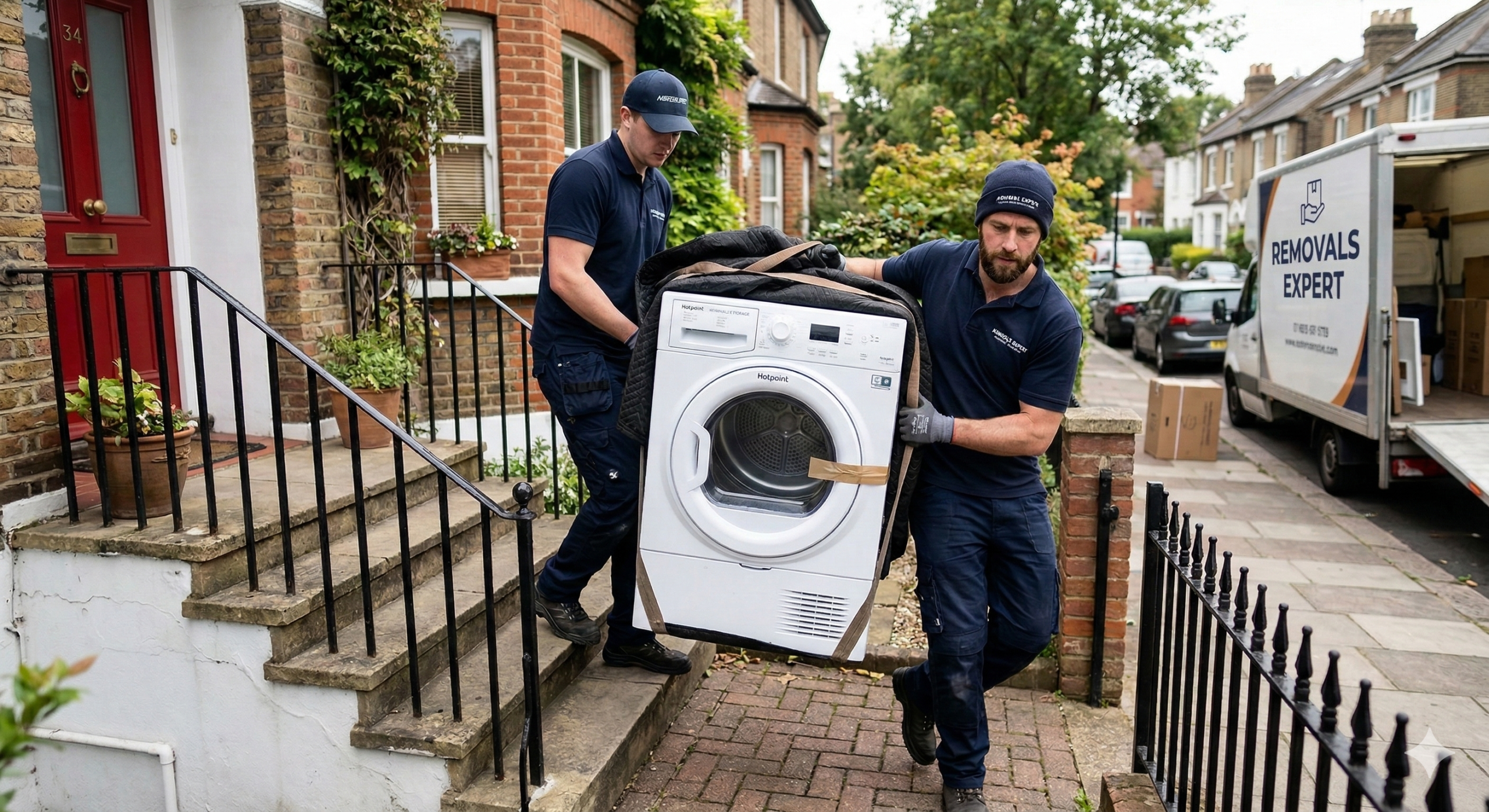
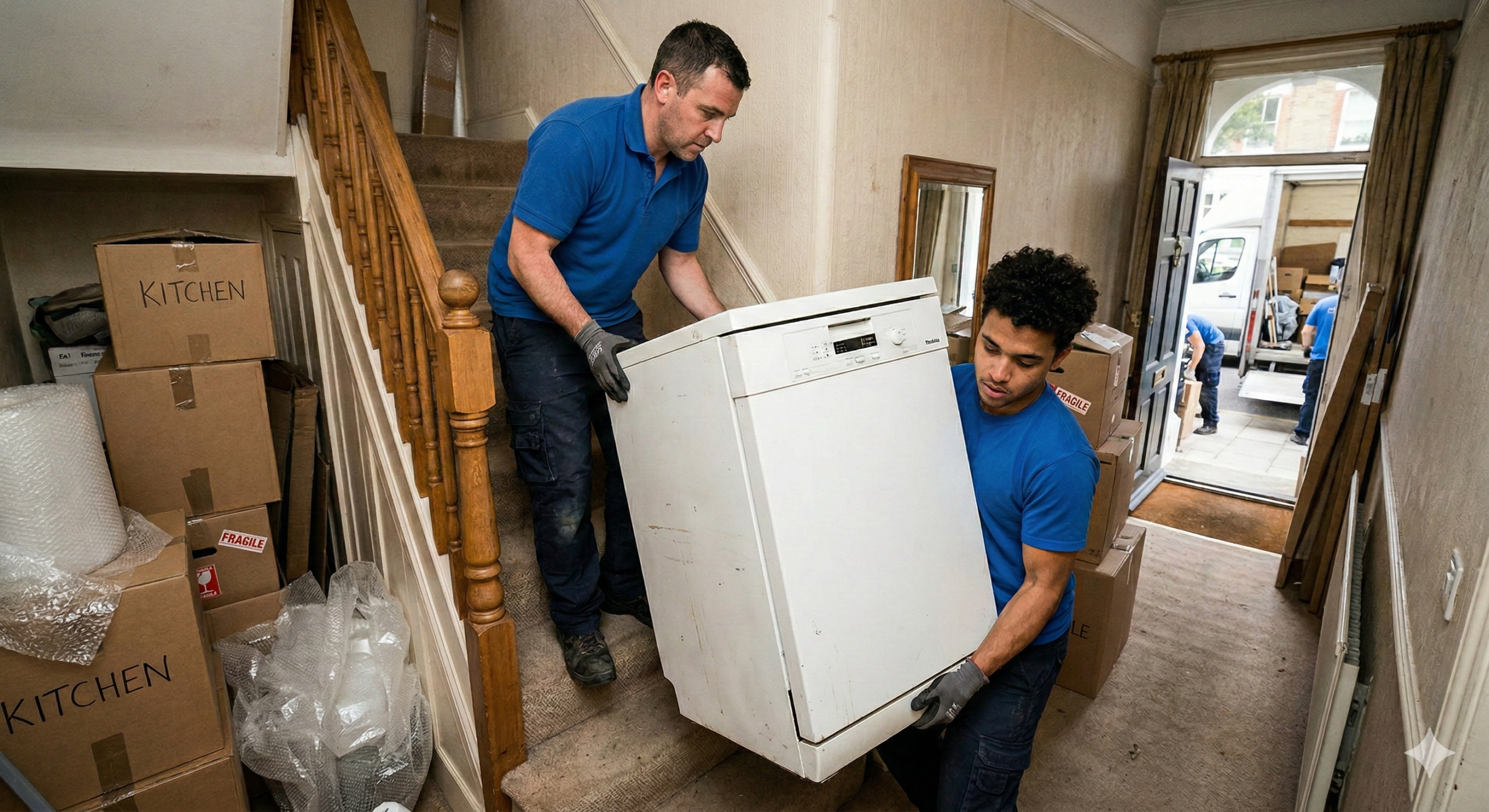
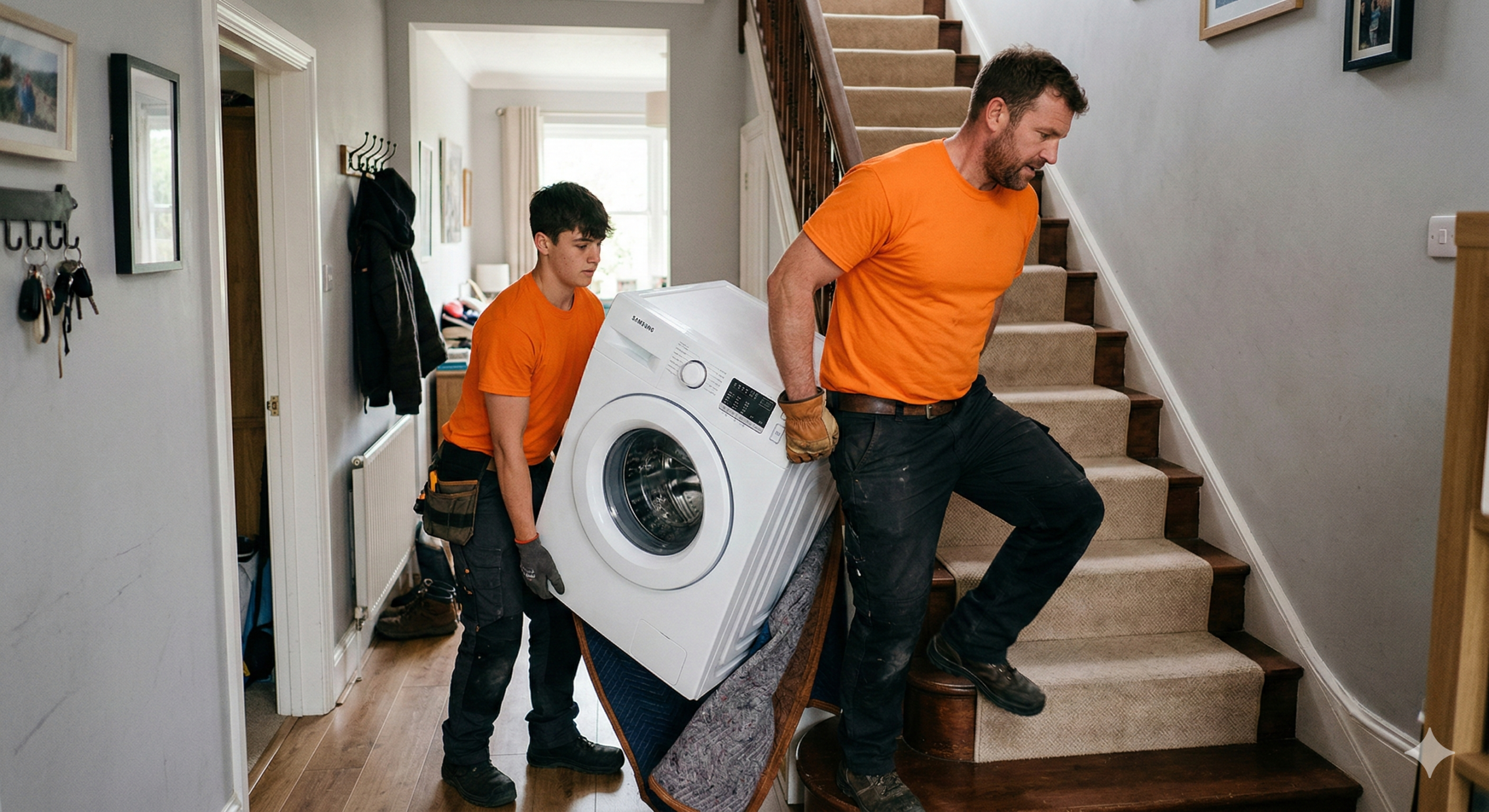
Always keep the washing machine upright. Tilting it on its side can cause internal oil leaks or damage to the drum support . When navigating stairs, take it slowly and carefully: one person should guide the dolly from above while another supports from below . When loading it into the moving truck, position it upright against a side wall and secure it firmly with straps to prevent it from moving during transit. It is best not to stack anything on top of it .
Step 6: Reinstall and Test at Your New Home
Once at your destination, unload the machine and move it to its new location. The first thing you must do is remove the transit bolts . Running the machine with the bolts still in place will cause violent shaking and severe damage. Reconnect the water hoses and drain hose, and plug the machine in. Turn on the water supply and then use a spirit level to adjust the machine’s feet, ensuring it is perfectly level . Finally, run a short empty cycle to check for leaks and ensure everything is working correctly .
Read more about How to Move a Dishwasher?
FAQs
Can I transport a washing machine on its side?
It is highly recommended to always keep a washing machine upright. Transporting it on its side can cause oil to leak from the drum mechanism or damage the suspension system .
What happens if I don’t use transit bolts?
Without transit bolts, the internal drum can move freely and bang against other components during the move, leading to expensive damage to the bearings and shock absorbers .
How long should I wait to use my washing machine after moving it?
You should wait at least 30 minutes to an hour after moving it into place. This allows any internal fluids that may have been disturbed during the move to settle back down .
Do I need to drain the water even for a short move?
Yes, absolutely. Even a small amount of water sloshing around inside can add significant weight and cause damage to internal parts like the concrete counterweight .
Conclusion
Moving a washing machine is a manageable task when approached with the right knowledge and preparation. By following these steps—from draining the system and securing the drum with transit bolts to keeping the appliance upright and using proper lifting equipment—you can protect both your appliance and yourself from harm. While it requires effort and caution, a successful move will ensure your washing machine is ready for many more loads of laundry in your new home. If at any point the task seems too daunting, especially when navigating stairs or tight spaces, do not hesitate to call professional movers who have the expertise and equipment to handle it safely .