

Introduction
For adults, moving day often feels like a military operation: a series of high-stress tasks involving logistics, heavy lifting, and the fear that something might break. For children, however, the experience is entirely different.
To a child, moving day can feel confusing and scary. Their home—their entire world of comfort and security—is being dismantled by strangers and packed into a giant metal truck. They see their toys disappearing into boxes and their parents running around frantically.
But what if we flipped the script? What if, instead of a day of upheaval, moving day became an adventure? With the right mindset and a little preparation, you can transform this potentially traumatic experience into a positive family memory. Here is how to keep your kids calm, safe, and even excited on the big day.
The Pre-Move Hype: Set the Stage
The adventure doesn’t start on moving day; it starts weeks before.
- Read Books About Moving: There are wonderful children’s books about moving to new houses. Stories help normalize the experience and show children that other kids feel the same way they do.
- Explore the “New World”: If possible, take your child to see the new house or apartment before the move. Let them play in the backyard or pick which room will be theirs. If you are moving too far for a visit, use online maps and videos to “explore” the new neighborhood together. Find the nearest park, ice cream shop, or playground.
- Talk About the Story: Frame the move as a new chapter. Instead of saying, “We are leaving this house,” try saying, “We are going on a new adventure to a wonderful new home where we will make new memories.”
The “Special Mission” Strategy
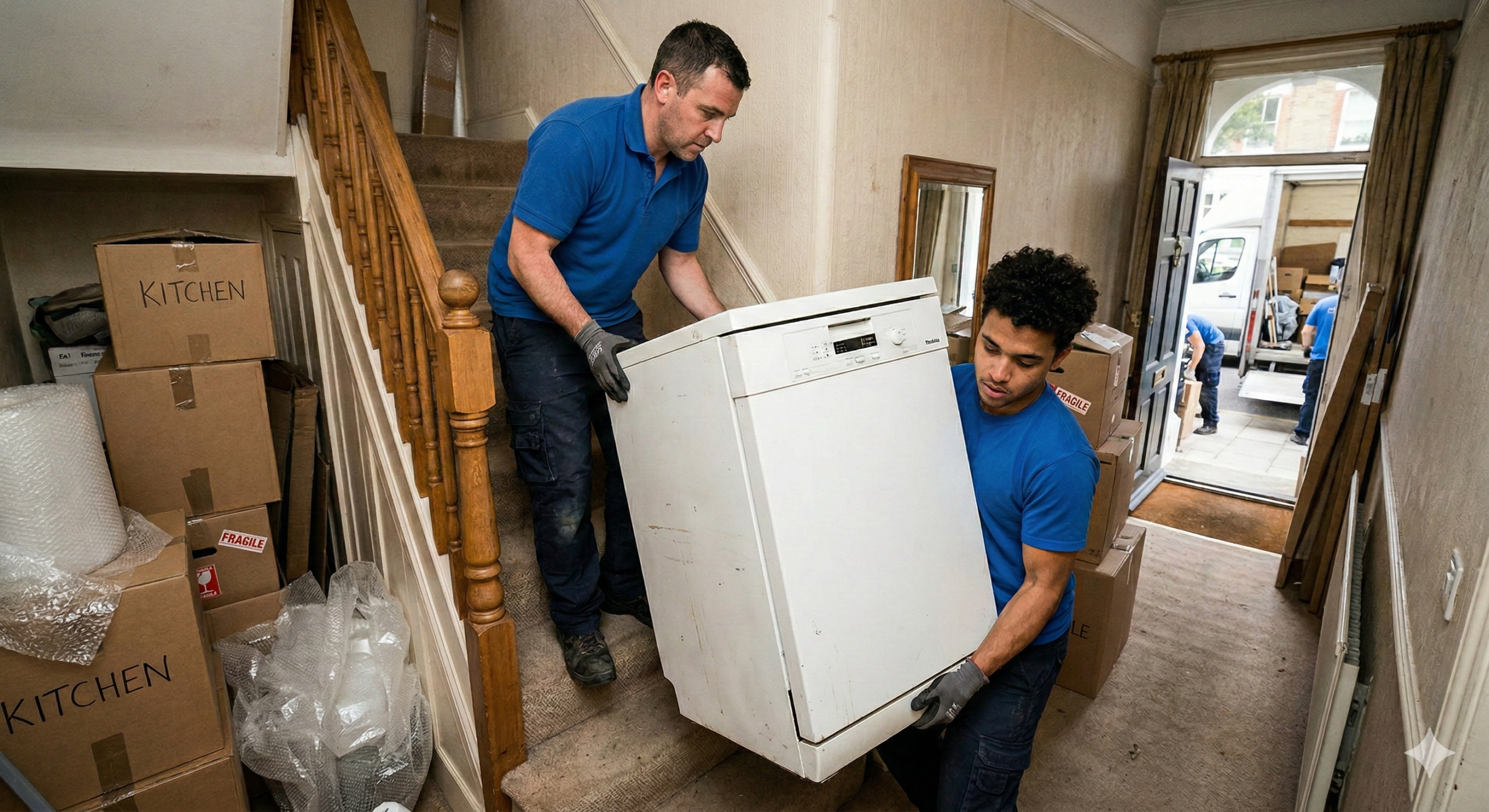
On moving day, professional movers are working hard to load the truck. The last place you want your child is under their feet. To keep them safe and occupied, give them a “job.”
- The Packing Paper Pirates: Give your child a roll of packing paper or bubble wrap and ask them to wrap their own special items (books, toys) to keep them safe. This gives them a sense of control.
- The Box Fort Builder: As boxes pile up, allow the kids to build a fort in an empty room or corner. It keeps them contained and entertained.
- The Label Artist: Give your child stickers and markers. Ask them to draw pictures on the outside of boxes destined for their new room (e.g., “Draw a sun for the box going in your new room”). This makes unpacking later a game of recognition.

The “Essentials” Backpack (Their Survival Kit)
While the movers handle the truck, your child needs their own survival gear. Pack a backpack or small suitcase for each child that does not go on the moving truck. This should include:
- Favorite comfort toy or blanket.
- Tablet with headphones and charger.
- A change of clothes and pajamas.
- Snacks and a water bottle (that won’t spill).
- A new, small toy or coloring book as a “moving day surprise.”
The Safety Zone
It is crucial to designate a “safe zone” in the old house (and later, the new house). This is a room or area where the movers are not currently working. It is a quiet space away from the chaos where your child can hang out with a babysitter, family friend, or one parent while the other supervises the move.
Pro Tip: On extremely busy moving days, it is often best to have one parent solely dedicated to the kids. If the kids are happy and entertained at a park or with a relative, the move will go much faster for everyone.
The New House Exploration
Once you arrive at the new house, let the adventure continue.
- The Room Race: Let the kids run to their new room first. If the furniture isn’t there yet, sit on the floor with them and imagine where everything will go.
- The Treasure Hunt: Hide a small treat or note in their new room for them to find when they arrive.
- Establish Comfort First: Before worrying about unpacking the kitchen, make the beds for the kids. Having their familiar bedding and a few stuffed animals set up will help them feel secure at bedtime.
Please read more about How to unpack new house?
FAQs
At what age is moving hardest on a child?
While every child is different, toddlers and teenagers often have the hardest time. Toddlers (ages 2-4) thrive on routine and may struggle with the disruption. Teenagers (ages 14-18) have established social lives and identities tied to their school and friends, making them resistant to change. However, clear communication and inclusion help at any age.
Should my kids be present while the movers are loading the truck?
It is generally recommended that young children not be present during the heavy lifting. It can be dangerous due to the heavy traffic and large equipment. If possible, arrange for a friend or family member to take them out for the day, or designate a “safe room” away from the action.
How do I handle a child who refuses to leave the old house?
Validate their feelings first. Say, “I know it’s sad to leave the place where you learned to ride your bike.” Then, pivot to the future. Let them be the last one to walk out the door, and perhaps let them ring the doorbell for the last time. This gives them a sense of closure and control over the exit.
How long does it take for a child to adjust to a new home?
Experts suggest the “3-3-3 Rule”: 3 days to get over the shock, 3 weeks to start forming a new routine, and 3 months to start feeling truly “at home.” Be patient and maintain old routines (like bedtime stories) as much as possible during this transition.
Conclusion
Moving is stressful for everyone, but children look to their parents for cues on how to react. If you are panicking, they will panic. If you frame the move as a team-based adventure, they are far more likely to feel excited rather than anxious. By involving them in the process, keeping them safe, and maintaining a positive attitude, you aren’t just moving boxes from point A to point B. You are building resilience and creating a family story about the time you all went on a great adventure together.