
Introduction
Moving to a new home is exciting; however, packing fragile items can quickly become stressful. From glassware and dishes to electronics and artwork, delicate belongings require extra care to prevent damage during transit. Fortunately, by using the right materials and techniques, you can significantly reduce the risk of breakage.
This comprehensive guide will walk you through exactly how to pack and move fragile items safely and efficiently.
Gather the Right Packing Supplies
Before you start packing, make sure you have high-quality materials. Using proper supplies makes all the difference.
Essential Packing Materials:
- Sturdy moving boxes (double-walled for heavy items)
- Bubble wrap
- Packing paper (avoid newspaper—it can stain)
- Foam sheets
- Packing peanuts
- Strong packing tape
- Stretch wrap
- Corner protectors
- Permanent markers and “FRAGILE” labels
Investing in quality packing materials upfront is a smart decision. In the long run, it can save you from the expense and disappointment of dealing with damaged items after the move.
Choose the Right Boxes
Not all boxes are created equal. Therefore, whenever possible, choose boxes that are specifically designed for fragile items to ensure better protection during your move.
- Dish pack boxes for kitchenware
- Cell dividers for glasses and bottles
- Picture boxes for artwork and mirrors
- Original packaging for electronics (if available)
Always avoid using oversized boxes for fragile items. Because the heavier the box becomes, the more pressure is placed on the items at the bottom, increasing the risk of cracks or breakage.
Wrap Each Item Individually
Never bundle fragile items together without protection.
Glassware and Dishes:
- Wrap each piece individually with packing paper.
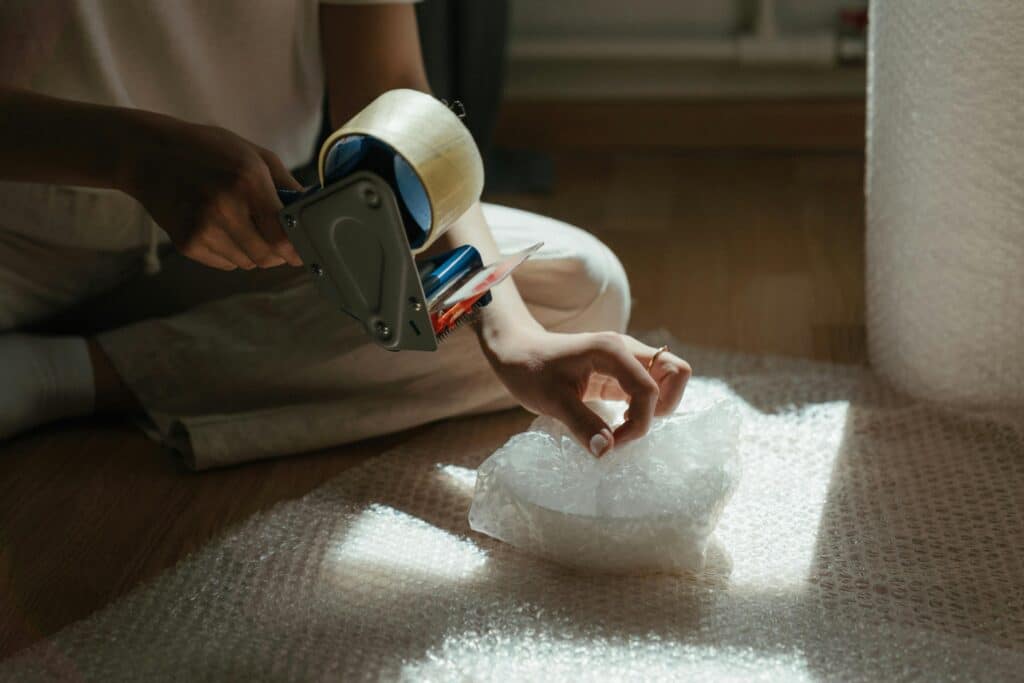
- Add a layer of bubble wrap around it.
- For plates, pack them vertically (like records), not stacked flat.
Stemware:
- Stuff packing paper inside the glass.
- Wrap the stem carefully.
- Use cell dividers for extra protection.
Electronics:
- Remove batteries.
- Wrap cords separately.
- Use anti-static bubble wrap if possible.
- Cushion all sides in the box.
Artwork and Mirrors:
- Use corner protectors.
- Wrap in packing paper first, then bubble wrap.
- Place cardboard sheets on both sides for reinforcement.
Read more about How to Transport a Mirror Safely?
Cushion the Bottom and Fill Empty Spaces
Before placing items inside the box:
- Add a thick layer of crumpled packing paper or packing peanuts at the bottom.
- After placing items inside, fill all gaps completely.
- Nothing inside the box should shift when shaken gently.
Empty space equals movement. Movement equals breakage.
Seal and Label Properly
Finally, seal the boxes securely with strong packing tape to keep everything in place during transit. Additionally, reinforce the bottom seam with extra tape—especially for heavier boxes—to provide added support and prevent the box from giving way under pressure.
Clearly label:
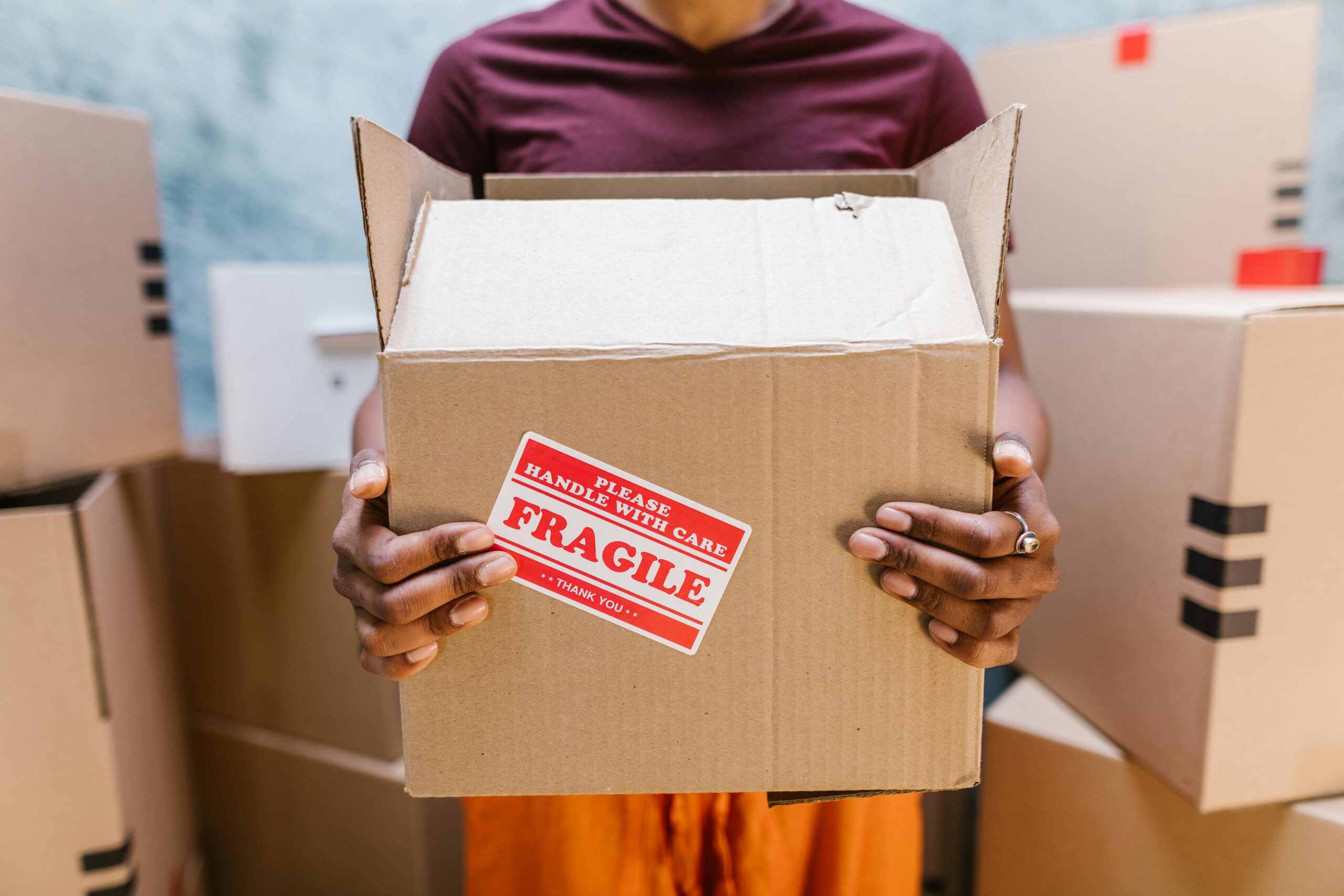
- “FRAGILE”
- “THIS SIDE UP”
- The room it belongs to
Proper labeling ensures movers handle boxes carefully and unpack them correctly.
Load Fragile Boxes Correctly in the Moving Truck
The packing of the truck properly is just as important as packing the box.
- Place fragile boxes on top of heavier boxes.
- Secure them with straps to prevent shifting.
- Avoid stacking too high.
- Keep valuable or irreplaceable items with you if possible.
Consider Professional Packing Services
When it comes to moving valuable antiques, fine art, or expensive electronics, hiring professional movers for packing may be a worthwhile investment. In addition, they use specialized materials and have the expertise needed to handle delicate belongings with the utmost care.The idea of moving valuable antiques, fine art, or expensive electronics, hiring professional movers for packing might be worth the investment. They have specialized materials and experience handling delicate belongings.
Common Mistakes to Avoid
- Using old or weak boxes
- Skipping padding to save time
- Overpacking boxes
- Leaving empty space inside
- Forgetting to label clearly
Avoiding these mistakes can significantly reduce damage during your move.
FAQs
What is the best way to pack glass dishes for moving?
Wrap each dish individually in packing paper, add bubble wrap for cushioning, and pack them vertically in a sturdy box with padding at the bottom and between items.
Can I use newspaper instead of packing paper?
It’s not recommended. Newspaper ink can stain your items. Use clean packing paper or tissue paper instead.
How do I protect electronics during a move?
Use original packaging if available. Otherwise, wrap electronics in anti-static bubble wrap, secure cords separately, and cushion the box well to prevent movement.
Should fragile boxes be marked?
Yes, clearly label them as “FRAGILE” and “THIS SIDE UP” to ensure careful handling during loading and unloading.
Is it worth hiring professionals to pack fragile items?
If you have valuable or sentimental items, professional packing services can provide added security and peace of mind.
Conclusion
Packing fragile items for a move doesn’t have to be overwhelming. By using the right materials, applying careful wrapping techniques, and labeling boxes properly, you can protect your delicate belongings and prevent costly damage. Take your time, pack methodically, and always prioritize safety over speed.
Ultimately, putting in a little extra effort during the packing process helps ensure your treasured items arrive at your new home safe and sound—ready to begin your next chapter with confidence.
Learn More about How to Unpack After Moving?