
Introduction
Moving a dishwasher can be one of the more challenging tasks when relocating a kitchen. Unlike other appliances that simply unplug, dishwashers are hardwired or permanently connected to water supplies and drainage systems. However, with the right preparation and tools, you can successfully move this essential appliance without causing leaks or damage to your home or the unit itself. This guide will walk you through every stage of the process.
Step 1: Gather Your Tools and Prepare
Before you begin any physical work, proper planning prevents problems. Rushing the process is the primary cause of mistakes .
You will need:
- Tools: Adjustable wrench, screwdrivers (flat-head and Phillips), pliers, and a voltage detector pen .
- Supplies: Moving blankets, packing tape, an appliance dolly, a bucket, and towels for catching residual water .
- Fasteners: Zip ties or rope to secure the door and cord .
First, measure your exit route. Measure the dishwasher’s dimensions and compare them to the width of all doorways, hallways, and stairs it must pass through. Clear the path of any obstacles like rugs and protect your floors with cardboard or old blankets.
Step 2: Cut Off Power and Water (Safety First!)
This is the most critical step to prevent electrical shock and flooding.
- Shut Off the Power: Do not just unplug it, as many dishwashers are hardwired. Go to your home’s circuit breaker and switch off the breaker dedicated to the dishwasher. For absolute safety, use a voltage detector pen at the dishwasher’s electrical junction box (usually located at the base of the unit behind the access panel) to confirm the power is off .
- Turn Off the Water Supply: Locate the water supply valve, typically under the kitchen sink. It’s a small valve on a pipe, often with a braided stainless steel hose running from it to the dishwasher. Turn the valve clockwise until it stops. To relieve pressure in the line, you can run the dishwasher for a few seconds to use up the water in the hose, then turn the breaker back off .
Step 3: Disconnect the Dishwasher
With the utilities safely off, you can now detach the unit from your home.
- Remove the Lower Access Panel: Most dishwashers have a toe-kick panel at the bottom front. Remove the screws holding it in place to expose the plumbing and electrical connections underneath .
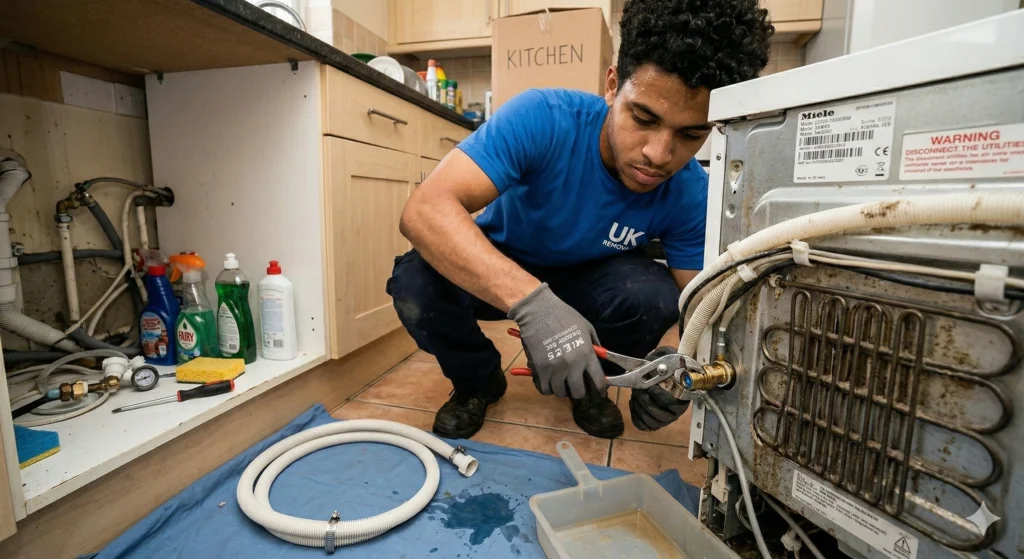
- Disconnect the Water Line: Place your bucket under the connection. Use your adjustable wrench to loosen the nut connecting the water supply line to the dishwasher’s water inlet valve. Be prepared for a small amount of water to drip out. If possible, cap the end of the supply line to prevent drips during the move .
- Disconnect the Drain Hose: Under the sink, find where the dishwasher’s corrugated drain hose connects to the sink drainpipe or garbage disposal. Loosen the hose clamp with pliers or a screwdriver and gently pull the hose free. Have towels ready, as some residual water will likely spill out .
- Disconnect the Electrical Supply: If your dishwasher is hardwired (wires are connected with wire nuts), this is a job best left to a professional electrician . If it has a power cord, simply unplug it from the outlet, which is usually located in the cabinet under the sink or behind the dishwasher.
- Release the Mounting Brackets: Open the dishwasher door. Look inside the top front corner of the tub. You should see small screws or brackets on each side securing the dishwasher to the underside of the countertop. Use your screwdriver to loosen and remove these screws .
- Adjust the Leveling Legs: At the front bottom corners of the dishwasher, you’ll find adjustable leveling legs. Turn them counterclockwise to lower them as much as possible. This will make it easier to slide the unit out from under the counter .
Also read about How to move Cooker?
Step 4: Remove and Transport the Dishwasher
The moment has arrived to pull the unit free.
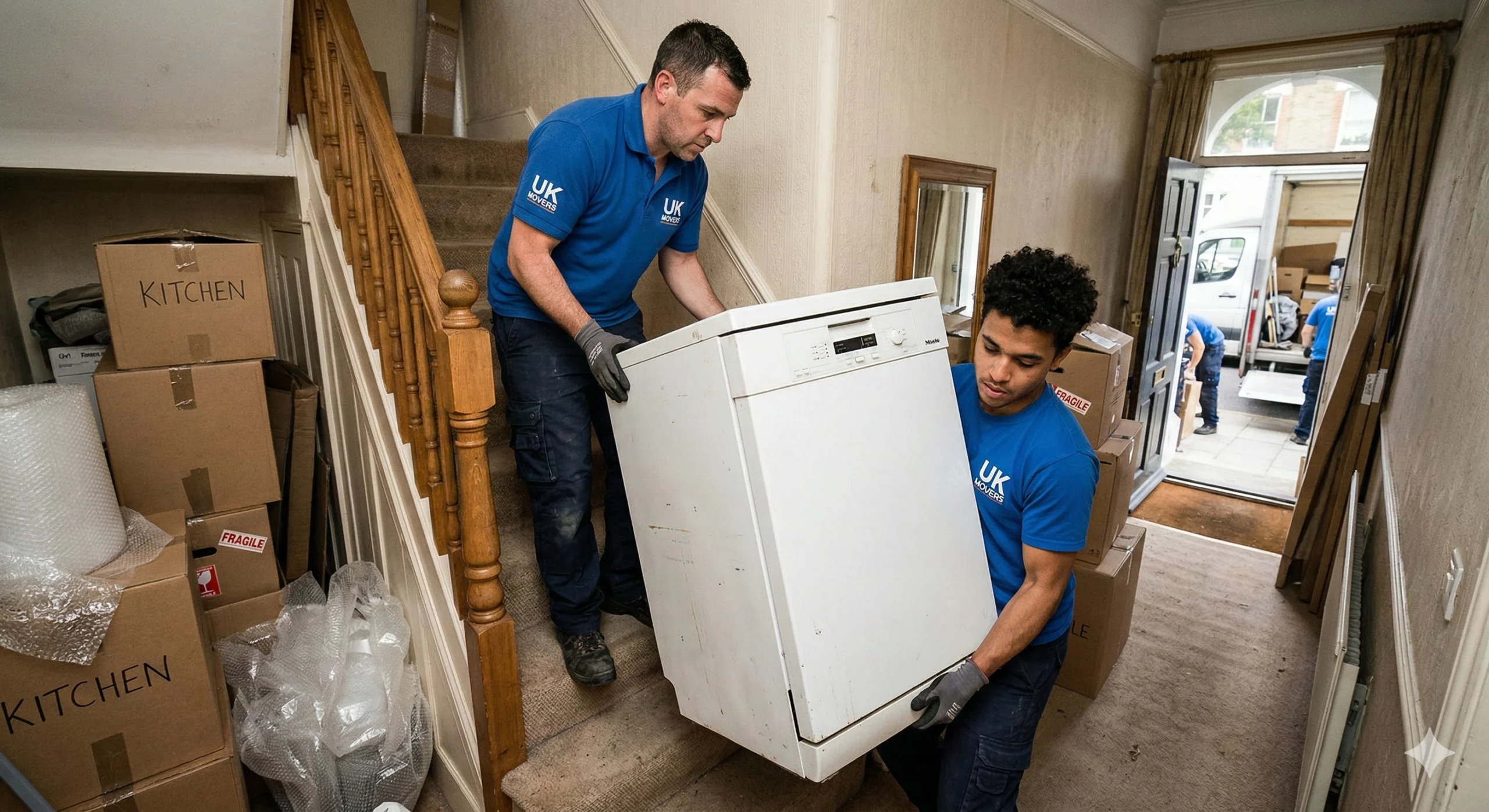
Always use two or more people for this step. Dishwashers are heavy and awkward .
- Perform a Final Check: Before pulling, run your hand along the back and sides of the unit to ensure no hoses or wires are still connected .
- Pull it Out: Carefully tilt the dishwasher back slightly onto a moving blanket. One person should pull from the front while another guides the sides, ensuring it doesn’t snag on the cabinets or floor .
- Wrap for Protection: Wrap the entire dishwasher in moving blankets to protect its finish from scratches and dents. Secure the blankets with packing tape, but avoid taping directly to stainless steel surfaces to prevent residue .
- Secure the Door: Tape the door shut or use a zip tie to keep it securely closed during transit. This prevents it from swinging open and causing injury or damage .
- Transport Upright: Never lay a dishwasher on its back or sides for transport. Doing so can cause internal components to loosen or residual water to leak into sensitive electronics . Use an appliance dolly to move it and secure it upright in the moving truck with straps so it cannot tip or slide .
What to Do With Small Parts and Hoses
Keep all disconnected parts organized for an easy reinstallation at your new home.
- Store the drain hose and power cord (if detached) inside the dishwasher tub itself .
- Place screws, mounting brackets, and any small parts in a labeled Ziploc bag and tape it to the side of the machine or place it inside the tub .
- Take a picture of the connections under the sink and behind the kick plate before you disconnect anything. This photo will be an invaluable reference when you go to reinstall the dishwasher in your new kitchen .
FAQs
Can I move a dishwasher myself, or should I hire a professional?
While a handy DIYer can absolutely move a dishwasher, it involves plumbing, electrical work, and heavy lifting. If you are uncomfortable with any of these steps—especially dealing with hardwired electrical connections—it is wise to hire a professional mover or an appliance technician to avoid injury or damage .
Do I need to remove the dishwasher’s racks and silverware basket?
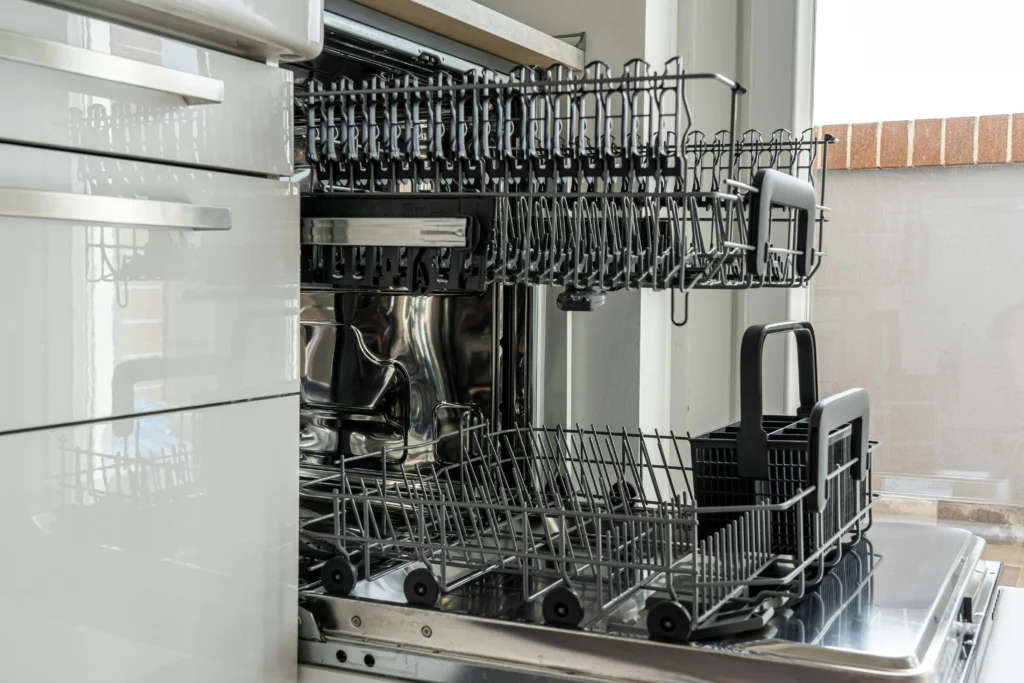
It is a good practice to remove loose items like the silverware basket and any detachable racks. Pack them separately in a box to prevent them from rattling around and causing damage inside the tub during transport .
What happens if I lay a dishwasher on its side to move it?
Laying a dishwasher on its side can cause residual water left in the pump to drain into the insulation and electronic components, leading to malfunction. It can also dislodge internal parts. Always transport a dishwasher in its upright position .
How far in advance should I disconnect my dishwasher before moving day?
You can perform the disconnection a day or two before your move. However, it’s best to leave pulling the unit out and loading it for moving day itself to keep it out of the way for as short a time as possible.
Conclusion
Moving a dishwasher is a detailed process, but by breaking it down into these logical steps, you can manage it safely and effectively. Remember the golden rules: safety first with power and water, keep it upright during transport, and organize your parts for a hassle-free reinstallation. By following this guide, you’ll ensure your dishwasher survives the move and is ready to tackle the dirty dishes in your new home.