

Introduction
Packing is often the most underestimated part of moving house. Many people assume it’s simply a matter of throwing items into boxes, only to find themselves surrounded by chaos, broken belongings, and overwhelming stress on moving day. The truth is, how you pack determines how smoothly your entire move will go.
After years of witnessing countless moves, we’ve identified the five most common packing mistakes people make. The good news? Each one is entirely avoidable with the right knowledge and a little preparation. Here’s what to watch out for—and exactly how to pack like a pro.
Mistake #1: Using the Wrong Boxes (Or No Boxes at All)
The Problem:
It’s tempting to use whatever containers you can find—rubbish bags, supermarket carrier bags, or old boxes that have seen better days. But this is a recipe for disaster. Rubbish bags tear easily, carrier bags handles snap, and weak boxes collapse under weight, especially when stacked.
How to Avoid It:
Invest in quality, double-walled moving boxes. They’re designed to stack safely and protect your belongings. Here’s a simple guide:
- Small boxes: For heavy items like books, tools, and kitchenware
- Medium boxes: For general household items like toys, towels, and decor
- Large boxes: For light, bulky items like duvets, pillows, and soft toys
- Wardrobe boxes: For hanging clothes (a game-changer for efficiency)
If you’re on a budget, source free boxes from supermarkets or local community groups, but check they’re sturdy and clean. Avoid boxes that previously held food with strong odours—they can transfer smells to your belongings.
Read More about How to get rid of boxes after moving?
Mistake #2: Overpacking Boxes (The Weight Trap)
The Problem:
The urge to “fill every gap” is strong, but overpacking creates two major issues. First, boxes become impossibly heavy, risking injury and making them difficult to carry. Second, overstuffed boxes are prone to bursting open, scattering your possessions everywhere.
How to Avoid It:
Follow the “lift test” rule. If you can’t comfortably lift a box with one hand on each side, it’s too heavy. As a general guide:
- Books should go in small boxes only
- Heavy kitchen items should be distributed across multiple boxes
- Leave a little breathing room—boxes shouldn’t bulge at the seams
Remember, professional movers charge by volume and weight. Overpacked boxes don’t save money; they just create hazards.
Mistake #3: No Padding or Improper Wrapping
The Problem:
Newspaper is better than nothing, but it’s not enough for fragile items. Worse, newsprint ink can transfer onto your belongings. Many people also make the mistake of wrapping items too loosely or not at all, leading to chips, scratches, and breakages.
How to Avoid It:
Use a combination of materials strategically:
- Bubble wrap: For glassware, electronics, and truly fragile items
- Packing paper: For dishes, bowls, and general wrapping (ink-free)
- Towels and bedding: Perfect natural padding for lamps, picture frames, and fragile edges
- Socks: Slip them over wine glasses and stemware for instant protection
Wrap each item individually and cushion the bottom and sides of boxes with crumpled paper. When you shake a packed box gently, nothing should move.
Pro Tip: For plates and bowls, pack them vertically (like records) rather than flat. This distributes weight and reduces pressure points.
Mistake #4: No Labels or a Chaotic Labelling System
The Problem:
Vague labels like “kitchen stuff” or “miscellaneous” are almost useless. When every box looks the same, you’ll find yourself opening multiple boxes searching for a kettle, bedding, or phone charger on your first night. This leads to frustration and a chaotic unpacking process.
How to Avoid It:
Create a clear, consistent labelling system. On every box, write:
- The room it belongs to (e.g., “Kitchen,” “Master Bedroom”)
- A brief contents list (e.g., “Pots, pans, utensils”)
- A fragility warning if needed (“FRAGILE—Glassware”)
For extra organisation, colour-code with stickers or markers (blue for kitchen, green for bedroom, red for fragile). Keep an “essentials box” clearly marked and loaded last so it’s the first thing you access.
Mistake #5: Packing a “Junk Drawer” Box
The Problem:
You know the one—the box where you throw random items “to sort later.” It seems efficient in the moment, but it’s a nightmare to unpack. Weeks after moving, you’ll be searching through this chaotic box for scissors, keys, or important documents.
How to Avoid It:
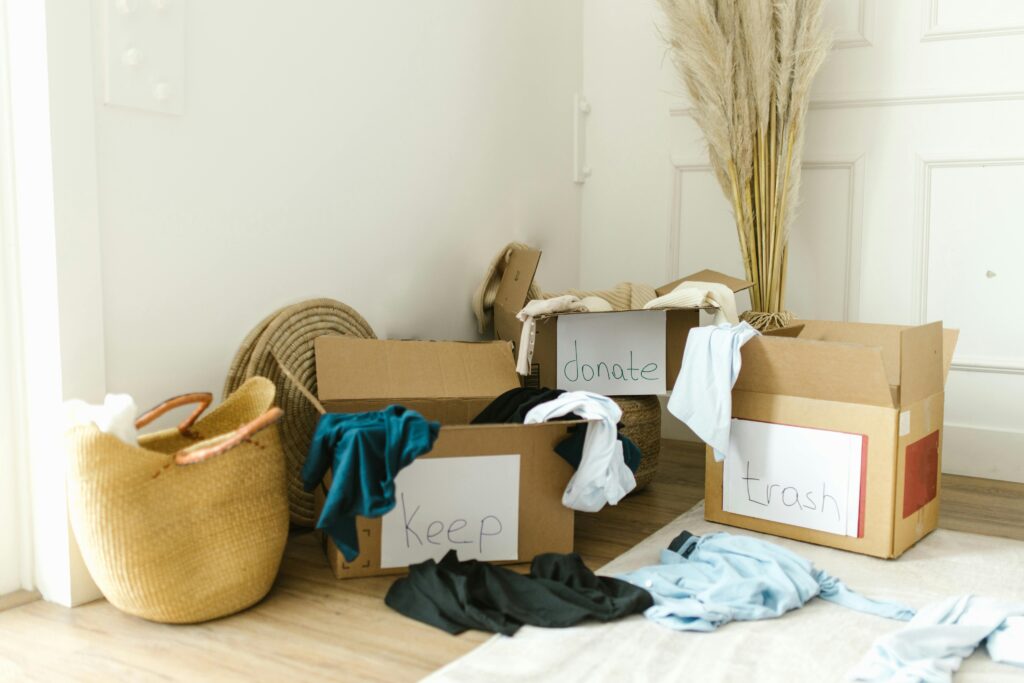
Commit to packing one category or room at a time. If you find items that belong elsewhere, create a “relocation box” and move them physically rather than mixing everything up. For loose odds and ends:
- Use small ziplock bags to group similar items (e.g., all screws from a disassembled shelf)
- Tape small bags to the furniture they belong to
- Label everything clearly
The goal is to make unpacking intuitive, not a treasure hunt.
Bonus: The One Mistake People Make on Moving Day
The Problem:
Many people pack perfectly but forget to prepare for the arrival at their new home. They arrive to find boxes everywhere, no clear plan, and mounting exhaustion.
The Solution:
Create a “Room Map” for your movers. Sketch a simple floor plan of your new home and mark which room is which. Tape a corresponding sign (e.g., “KITCHEN”) on each door frame. Movers can then place boxes directly in the right rooms, saving you hours of hauling furniture later.
FAQs
How far in advance should I start packing?
Start at least 4-6 weeks before moving day. Begin with out-of-season items, guest rooms, and storage areas. Pack room-by-room, leaving everyday essentials for the final week.
Is it worth paying for professional packing services?
If your budget allows, professional packing saves enormous time and stress. However, for most budget-conscious moves, self-packing is perfectly fine—just follow best practices and start early.
What should I never pack in a moving box?
Never pack hazardous materials (paints, fuels, cleaning chemicals), perishable food, important documents (passports, wills), valuables (jewellery, cash), or medications. Keep these with you personally.
How do I pack oddly shaped items like lamps or artwork?
For lamps, remove the shade (wrap separately) and wrap the base in bubble wrap, securing with tape. For artwork, use special picture boxes if available, or wrap in bubble wrap and sandwich between cardboard sheets.
Conclusion
Packing doesn’t have to be the most stressful part of moving. By avoiding these five common mistakes—using the right boxes, packing appropriate weights, wrapping properly, labelling clearly, and staying organised—you set yourself up for a smoother move and a calmer arrival.
Remember, good packing isn’t about perfection. It’s about intention. Every box you pack thoughtfully is a gift to your future self on the other side of moving day. Take your time, follow these guidelines, and you’ll arrive at your new home with your belongings intact and your sanity preserved.
A well-packed box isn’t just a container—it’s peace of mind.